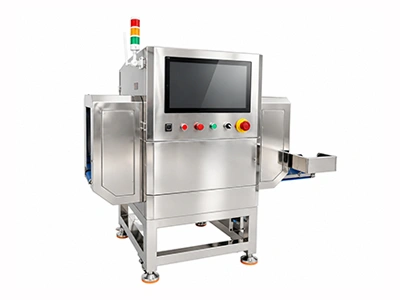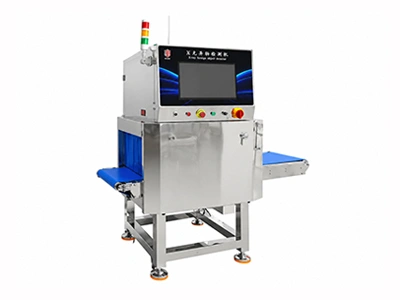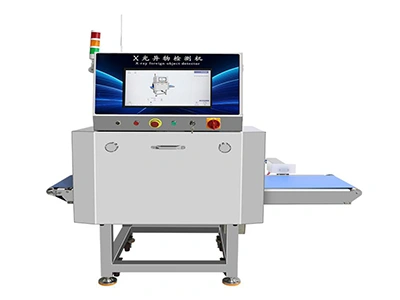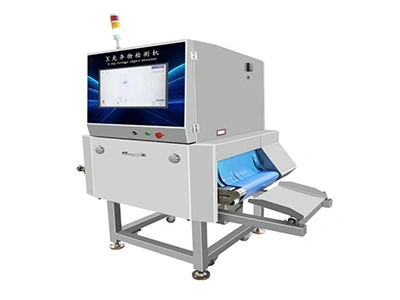
Top-Down X-ray Inspection System
Detection capability is contingent upon the shape and material of the contaminant, the density of the product, the thickness of the packaging, and the pace of the conveyor. It also depends on the acceptance conditions verified through testing of customer samples.
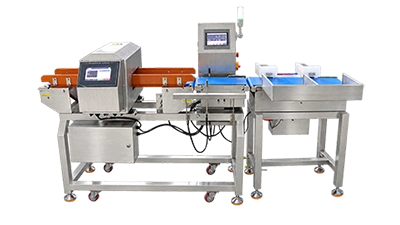
Foreign objects such as metal, glass, stone, and ceramics may enter products during food, pharmaceutical, and packaging processes. Conventional metal detection equipment mainly detects metal and struggles to detect high-density non-metallic foreign objects.
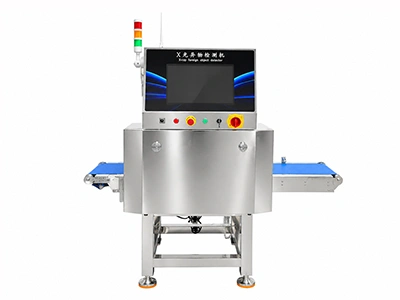
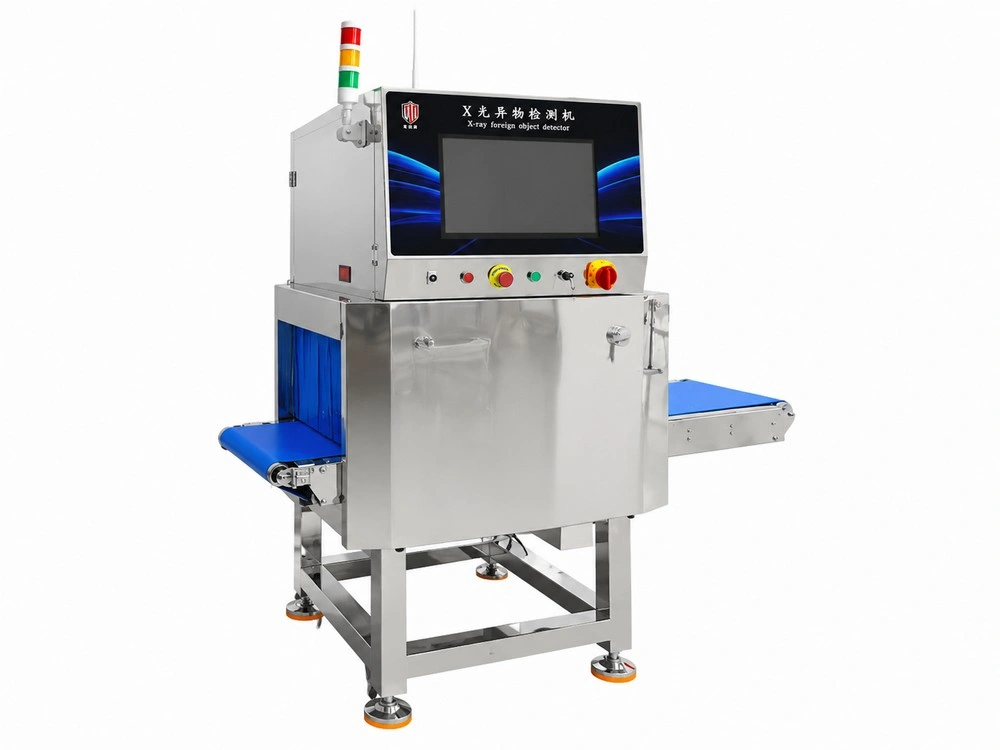
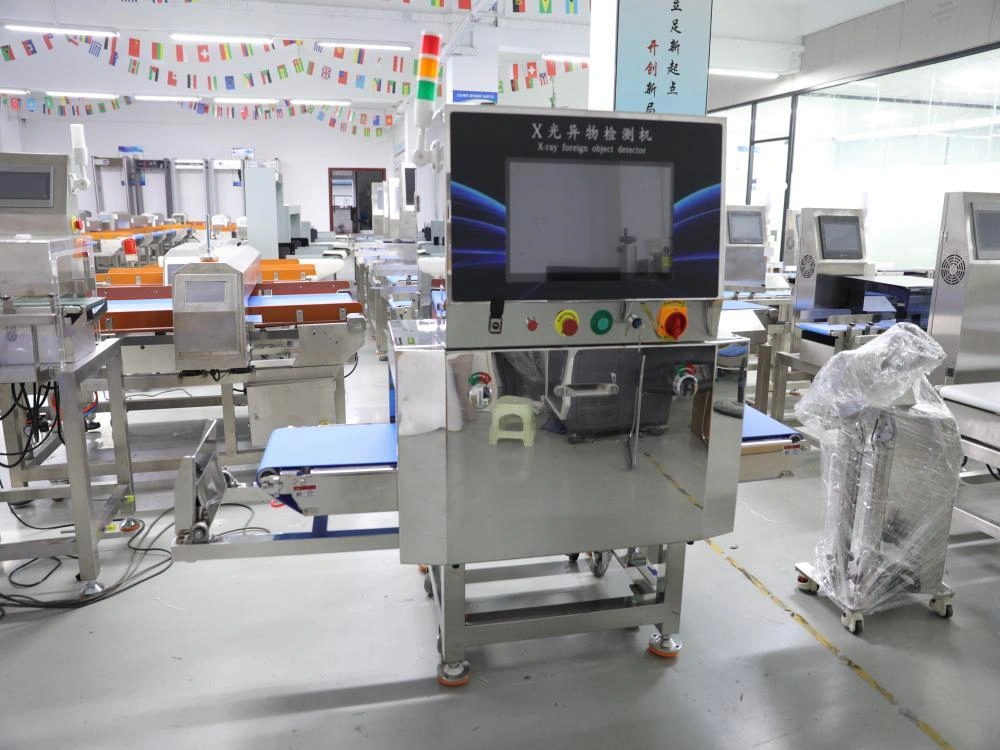
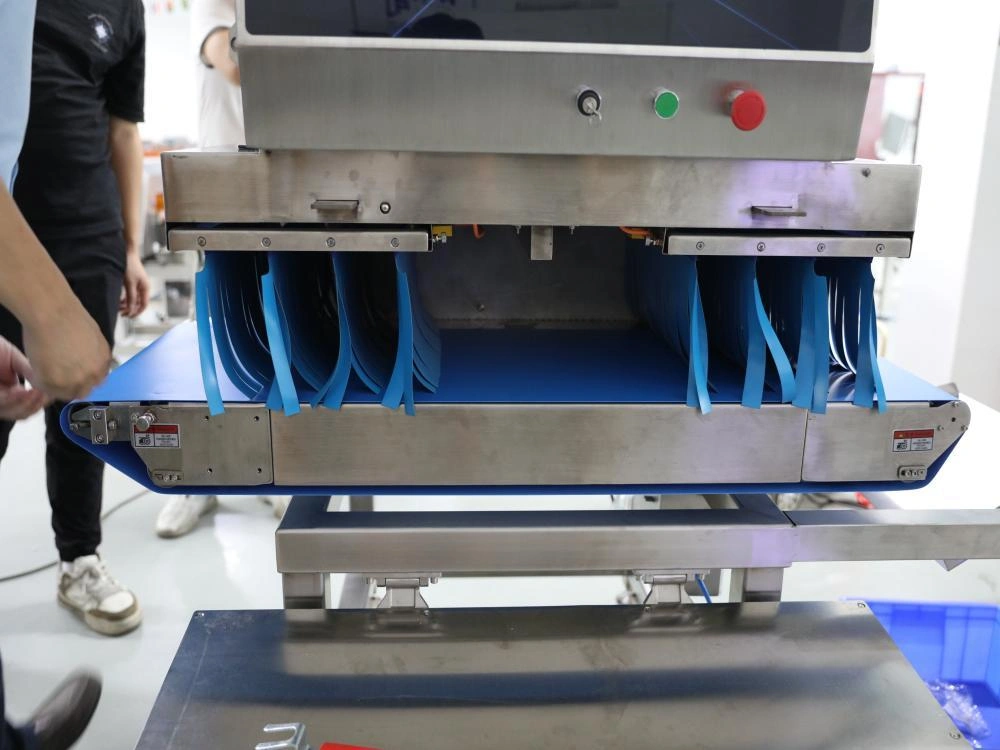
The top-down X-ray system employs an overhead X-ray illumination scheme. It is suitable for in-line foreign item detection on most horizontally conveyed products, such as bagged, boxed, and tray-packed products moving over a flat conveyor.
The apparatus uses X-ray imaging technology to analyse density fluctuations inside the product and identify problematic spots. An alarm or an automatic reject system can be set up based on production requirements.
| Item | Top-Down X-ray Inspection System |
| Inspection method | X-ray transmission inspection |
| Detectable contaminants | Iron, copper, stainless steel, glass, stone, bone fragments, etc. |
| Construction | SUS304 stainless steel (mirror finish) |
| Line height | 680 ± 80 mm (custom height available) |
| Detection area | W 400 × H 220 mm (customizable) |
| Overall dimensions | L 900 × W 1,400 × H 1,850 mm |
| Detection performance | Detection performance depends on contaminant material and shape, product density, packaging thickness, and conveyor speed. Final performance is subject to sample testing and the agreed acceptance criteria. |
| Conveyor speed | 5–60 m/min, adjustable |
| Safety | Multiple safety interlocks; X-ray leakage <0.4 μSv/h |
| Power | Single-phase 220 V, 50 Hz / 1.5 kW |